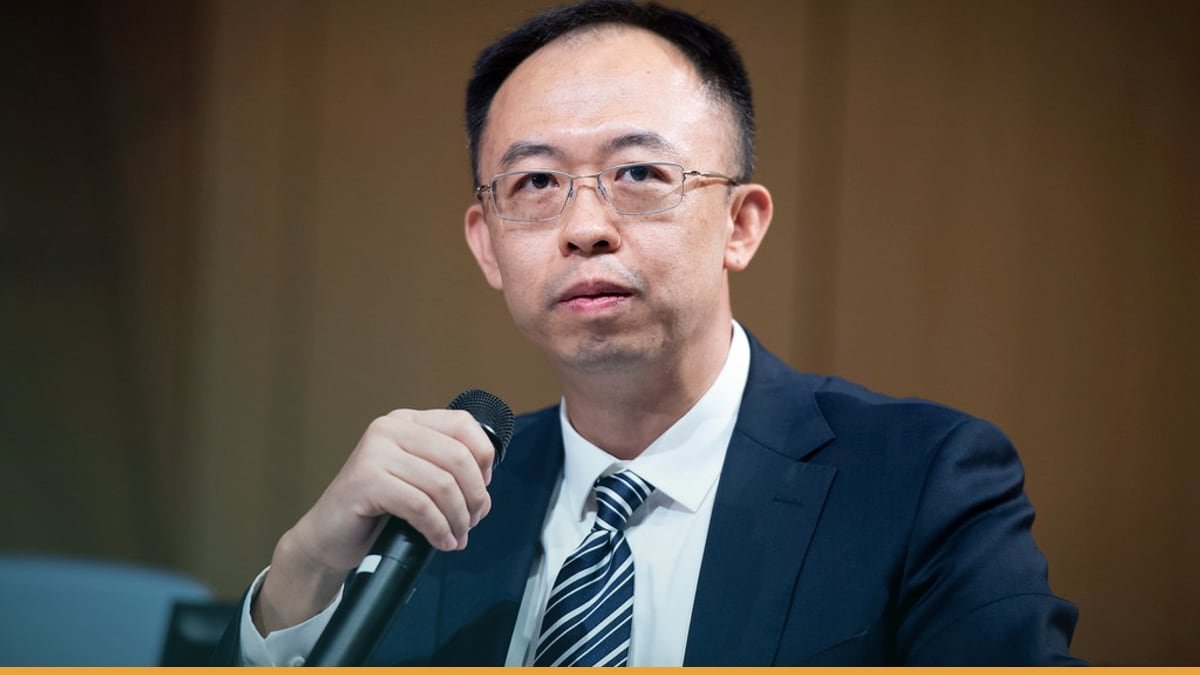
Header image: Global Innovation Index 2022 Panel Discussion: “The Future of Innovation-Driven Growth: Stagnation or Revival?” by WIPO | OMPI, CC BY 2.0, via flickr via Openverse — cropped to 16:9 and colour-adjusted.
Key takeaways
- The Global Innovation Index ranks 139 economies but favors high-income nations with strong IP regimes
- MIT’s six-phase framework structures global innovation from problem analysis to commercialization
- AI accelerates every phase of innovation but risks widening global disparities in innovation capacity
Switzerland has consistently ranked at the top of the Global Innovation Index. Again. The rankings typically feature high-performing economies like Sweden, the U.S., and UK among the top positions. But the real story isn’t who’s on top. It’s whether this index, and the frameworks behind it, can keep up when AI rewrites the rules of innovation itself.
Global innovation isn’t just R&D or patents. It’s a systematic, geographically distributed workflow that turns ideas into scalable solutions—measured by the Global Innovation Index (GII), ranked by WIPO, and executed through structured methodologies like MIT’s six-phase framework. That framework covers the full lifecycle: problem analysis, idea generation, appraisal, planning, implementation, and commercialization. Applied across borders, time zones, and regulatory environments. The GII 2025 covers 139 economies, assessing them across various innovation dimensions. The top performers aren’t just spending more on R&D. They’re building ecosystems where ideas move from lab to market faster. AI is now accelerating every phase. But the question isn’t who leads. It’s whether this framework can adapt when AI disrupts innovation itself—or if it will remain a tool for the usual suspects while the rest play catch-up.
The Global Innovation Index: The Benchmark That Shapes National Strategy
The GII isn’t just a ranking. It’s a policy lever. Launched in 2007 by INSEAD and World Business magazine, it now assesses 139 economies in 2025—up from 133 in 2024—across numerous indicators. The methodology assesses innovation through input and output dimensions. The 2026 report drops on September 29, 2026, during a hybrid summit. Ministers and CEOs will analyze the rankings and country performances.
Here’s what the numbers reveal. High-income economies dominate inputs. Sweden typically performs strongly in human capital metrics. But middle-income nations are closing the gap in outputs. China performs strongly in knowledge and technology outputs among global economies. The GII doesn’t just track patents. It measures various proxy metrics for how ideas spread. But it’s not neutral. The index favors economies with strong IP regimes. Grassroots innovators in informal sectors—Nairobi’s jua kali artisans, for example—disappear from the data.
How Global Innovation Actually Works: The MIT Six-Phase Framework
Global innovation isn’t a eureka moment. It’s a repeatable process. MIT’s Innovation Framework breaks it into six phases, each with concrete deliverables:
- Problem analysis – Teams map gaps using data, not guesswork. A Nairobi-based agtech startup might use satellite imagery to identify soil degradation before brainstorming solutions.
- Idea generation – Cross-border brainstorming. Tools like Miro or Figma let designers in Berlin collaborate with engineers in Bangalore in real time.
- Appraisal – Feasibility studies, not wishful thinking. A fintech idea might get stress-tested against GDPR compliance (EU) and RBI regulations (India) simultaneously.
- Planning – Gantt charts with time zones. A pharma venture might plan clinical trials in South Africa (fast approvals) and manufacturing in Ireland (tax incentives).
- Implementation – Prototypes or pilots. Hardware startups often split production: PCB assembly in Shenzhen, final assembly in Mexico.
- Marketing/sales – Localized scaling. A SaaS product might launch in English, Spanish, and Mandarin on day one, with pricing adjusted for purchasing power.
The output? New goods, services, processes, or marketing strategies. But only if the team navigates regulatory, cultural, and logistical hurdles. This isn’t innovation tourism. It’s structured collaboration.
The Five Dimensions of Global Innovation (Spoiler: It’s Not Just Tech)
Global innovation isn’t monolithic. IGI Global’s taxonomy breaks it into five types, each with distinct mechanics:
- Managerial innovation – New organizational structures. Spotify’s squad model. Haier’s Rendanheyi micro-enterprises.
- Technological innovation – R&D-driven product improvements. Moderna’s mRNA platform, developed with NIH funding and global clinical trials.
- Market innovation – Novel pricing or distribution. M-Pesa didn’t invent mobile money. It invented a model that worked for unbanked populations.
- Organizational innovation – Workflow or culture shifts. GitLab’s all-remote model forced competitors to rethink HQ-centric cultures.
- Business innovation – New revenue models. Tesla’s direct-to-consumer sales bypassed dealerships. BYD’s blade batteries disrupted EV supply chains.
The GII tracks some of these—high-tech exports for technological innovation, for example—but others, like managerial innovation, slip through the cracks. That’s a problem. A country could rank high in patents but low in actual market impact if its startups can’t scale beyond prototypes.
The Global Innovation Fund’s Scaling Framework: From Pilot to Impact
The Global Innovation Fund (GIF) is the GII’s practical counterpart. A nonprofit impact investor funding pro-poor innovations. Unlike the GII’s country rankings, GIF’s focus is on scaling: moving ideas from proof of concept to global adoption. Their pipeline has three stages:
- Proof of concept – Small grants ($50K–$200K) to test viability. A solar lantern pilot in rural Kenya, for instance.
- Pilot testing – Mid-sized investments ($200K–$2M) to refine the model. The lantern might now include mobile payments for financing.
- Scaling readiness – Large investments ($2M–$15M) for expansion. The lantern could scale to Nigeria, India, and beyond—if evidence shows impact.
GIF’s model is evidence-based. They don’t fund ideas. They fund data. But scaling isn’t linear. A pilot might work in Kenya but fail in Nigeria due to grid reliability or consumer behavior. And $15M is a rounding error compared to VC funding. GIF’s entire portfolio is smaller than a single Series B round for a Silicon Valley startup. That’s the tension. Global innovation needs both the GII’s macro lens and GIF’s micro execution, but neither has the firepower to match private capital.
The GII in Action: What the Rankings Really Tell Us
The GII’s top 10 is predictable. The top positions typically include high-income economies from various regions. But dig deeper, and the insights get interesting.
Middle-income economies are punching above their weight. China and India often score higher in knowledge/tech outputs than their GDP might suggest. China ranks highly in patents, high-tech exports, and creative goods exports.
Inputs don’t equal outputs. Japan often shows a gap between innovation inputs and outputs. Strong R&D. Weaker commercialization. This represents an innovation efficiency gap.
Regional disparities are stark. Sub-Saharan Africa typically has lower GII scores. Europe typically has higher GII scores. The gap isn’t just funding. It’s infrastructure, education, market access.
The GII’s real value isn’t the ranking. It’s the sub-indicators. A policymaker might notice disparities across different innovation indicators. That’s actionable. But the index has blind spots. It doesn’t track informal innovation—India’s jugaad culture, Africa’s mobile money ecosystems—because they don’t fit traditional metrics.
AI’s Role: Accelerating—or Distorting—Global Innovation
AI isn’t just another tool. It’s rewiring the innovation lifecycle.
Problem analysis: AI sifts through satellite data, social media, IoT sensors. Climate tech startups use AI to predict droughts before they happen.
Idea generation: Generative AI like Midjourney or GitHub Copilot lets teams prototype faster. A designer in Lagos and an engineer in Warsaw can iterate on a product in real time.
Appraisal/planning: Predictive models simulate regulatory hurdles. A healthtech startup might use AI to compare FDA (U.S.) and EMA (EU) approval timelines.
Implementation: AI automates testing. Tesla’s AI-driven factories reduce prototype-to-production cycles by 30%.
Marketing/sales: AI tailors messaging. A SaaS product might use AI to generate localized ad copy for 20 markets simultaneously.
The GII is adapting. The 2025 report includes new indicators for AI patents, digital infrastructure, AI-driven exports. But AI adoption is uneven. The U.S. and China account for 60% of AI patents. Africa’s share? Less than 1%. If AI becomes the dominant innovation tool, the gap between haves and have-nots could widen. Not just between countries, but within them.
The Critiques: What the GII and GIF Miss
The GII and GIF are useful. But they’re not gospel. Here’s what they get wrong.
Formality bias: The GII tracks patents, R&D spend, high-tech exports. It misses informal innovation. Kenya’s M-Pesa started as a grassroots solution, not a corporate R&D project.
Scaling assumptions: GIF’s model assumes innovations scale linearly—pilot to expansion to global. But scaling is messy. A vaccine might work in clinical trials but fail in rural distribution.
Cultural blind spots: The GII favors economies with strong IP regimes. But in some cultures, innovation thrives through open-source or collective models. Wikipedia. Linux.
Geographic concentration: The GII’s top 20 are all high-income economies. But innovation hotspots like Bengaluru, Nairobi, Medellín don’t crack the top 50. The index rewards inputs (R&D spend) over outputs (market impact).
AI’s double-edged sword: AI could democratize innovation. Or deepen divides. If only a few countries dominate AI patents, the rest will be consumers, not creators.
The bigger question: Is "global innovation" truly global if it’s dominated by a handful of ecosystems—Silicon Valley, Shenzhen, Tel Aviv? The GII’s rankings suggest yes. The reality? More complicated.
What’s Next? The Future of Global Innovation
The GII 2026 will likely focus on three themes:
AI’s impact: New indicators for AI-driven exports, AI patents, digital infrastructure. Expect China and the U.S. to pull further ahead.
Sustainability: Climate tech and circular economy metrics will gain weight. Countries with strong green policies—Denmark, Sweden—could climb.
Post-pandemic resilience: Supply chain innovation and remote collaboration tools will be scrutinized. Vietnam’s rise as a manufacturing hub might get a boost.
But the real shift isn’t in the rankings. It’s in how innovation happens.
Distributed teams aren’t going away. Tools like Slack, Notion, Figma will keep enabling cross-border collaboration.
Regulatory arbitrage will persist. Startups will keep exploiting regulatory gaps. Crypto startups incorporating in Estonia for EU access while operating in Africa, for example.
AI’s role will grow. Could it make innovation more democratic? Or will it create a new class of AI-powered monopolies?
The biggest open question: Can global innovation frameworks like the GII and GIF adapt fast enough to keep pace with AI-driven disruption? Or will they remain tools for the usual suspects—high-income economies, elite universities, venture-backed startups—while the rest of the world plays catch-up? The answer will define who benefits from innovation in the next decade.