Tag: debt management

  • **What Are Finance Charges in HDFC Credit Cards? A Detailed Breakdown**

    **What Are Finance Charges in HDFC Credit Cards? A Detailed Breakdown**

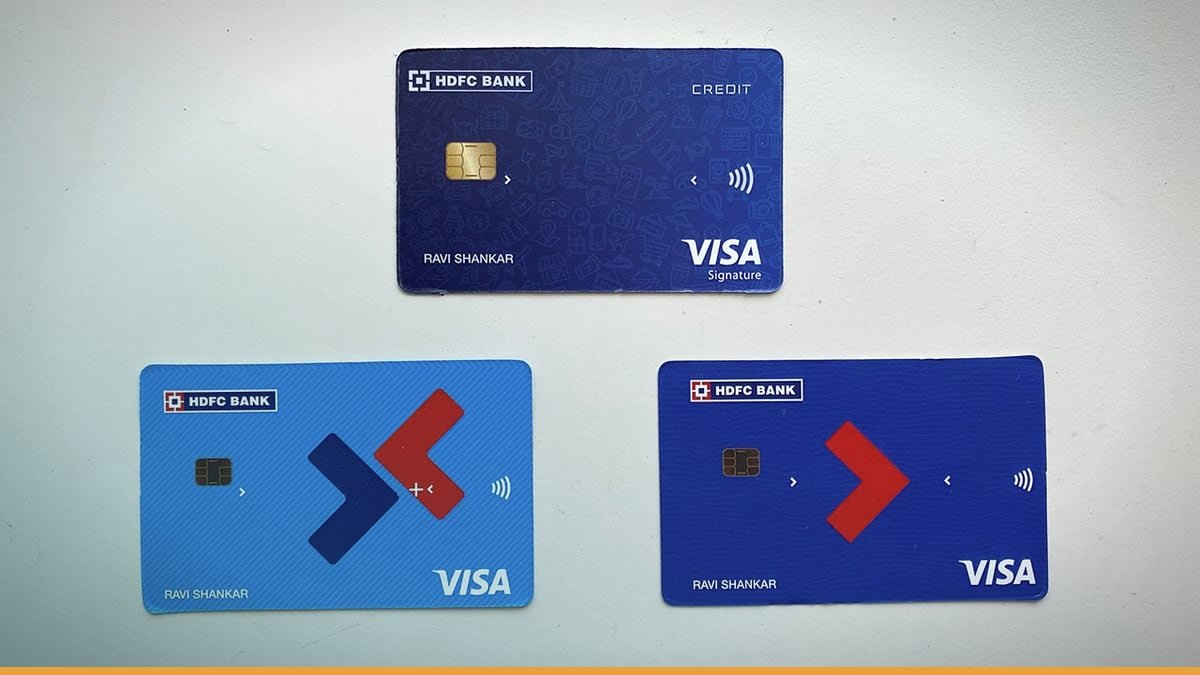
    Header image source: HDFC Bank re-launches Millennia & other credit cards – CardExpert via CardExpert via Google — cropped to 16:9 and colour-adjusted.

    Key takeaways

    • HDFC finance charges range 2.5%-3.6% monthly (30%-43.2% annual)
    • Daily reducing balance method compounds interest every day
    • Pay full balance by due date to avoid all finance charges

    Finance charges hit your HDFC credit card statement when you don’t clear the full balance by the due date. That’s it. Not late fees, not annual charges—just interest on unpaid balances. Avoidable? Absolutely. Just pay in full every month. But here’s the rub: HDFC’s rates run from 2.5% to 3.6% per month, which translates to 30%–43.2% annualised. That’s not just expensive—it’s a debt spiral waiting to happen if you slip up.

    Take a hypothetical balance on the MoneyBack card. Pay less than the full balance by the due date, and finance charges apply to the remaining amount. At 3. At 3.6% per month, interest accrues on the unpaid balance. Miss a few payments, and that number starts compounding. Suddenly, you’re paying interest on interest, and a manageable balance balloons into something far worse.


    How HDFC Calculates Finance Charges: The Daily Grind

    HDFC doesn’t just tack on a flat fee. It uses a daily reducing balance method—interest calculated on the outstanding amount every single day, then summed at the end of the billing cycle. Here’s the breakdown:

    • MoneyBack Credit Card: 3.6% per month (43.2% annualised).
    • All Miles Credit Card: 3.49% per month (41.88% annualised).
    • General range across HDFC cards: 2.5%–3.6% per month (30%–43.2% annualised).

    The formula is simple: Finance Charge = (Outstanding Balance × Daily Rate) × Number of Days

    Where Daily Rate = Monthly Rate ÷ 30. For the MoneyBack card, that’s 0.036 ÷ 30 = 0.0012 (or 0.12%) per day.

    Why does this matter? Because every day counts. Pay ₹5,000 on a ₹50,000 balance 10 days after the due date, and you’re still paying interest on the full ₹50,000 for those 10 days—and on the remaining ₹45,000 for the rest of the cycle. There’s no partial grace period. No mercy.


    When Do Finance Charges Actually Kick In?

    Finance charges don’t apply if you pay the full statement balance by the due date. That’s the rule. But the exceptions are what trip people up.

    Primary Trigger: Not paying the full statement balance. Paying the minimum due (usually 5% of the outstanding) avoids late fees but not finance charges. Those still apply to the remaining balance.

    Grace Period: Typically 20–50 days, depending on when you made the purchase. Buy something on Day 1 of your billing cycle and pay it off by Day 50, no interest. But carry a balance from the previous cycle, and the grace period vanishes. New purchases start accruing interest immediately.

    Exceptions Where Finance Charges Apply Immediately:

    • Cash advances: No grace period. Interest starts the moment you withdraw cash.
    • EMIs: Separate interest rates apply (usually lower than finance charges, but still not zero).
    • Partial payments: Even if you pay more than the minimum due, finance charges apply to the remaining balance.

    The Hidden Cost: How Finance Charges Compound Debt Over Time

    Let’s run the numbers. You have a ₹50,000 balance on your HDFC MoneyBack Credit Card (3.6% monthly finance charge). The minimum due is ₹2,500 (5%).

    • Month 1:
    • You pay ₹2,500.
    • Remaining balance: ₹47,500.
    • Finance charge: ₹47,500 × 3.6% = ₹1,710.
    • New balance: ₹49,210.
    • Month 2:
    • You pay another ₹2,500.
    • Remaining balance: ₹46,710.
    • Finance charge: ₹46,710 × 3.6% = ₹1,681.56.
    • New balance: ₹48,391.56.
    • Month 3:
    • You pay ₹2,500 again.
    • Remaining balance: ₹45,891.56.
    • Finance charge: ₹45,891.56 × 3.6% = ₹1,652.10.
    • New balance: ₹47,543.66.

    After three months, you’ve paid ₹7,500 but reduced your balance by just ₹2,456.34. The rest went to interest. At this rate, clearing the original ₹50,000 debt would take over two years—and you’d pay ₹18,000+ in interest along the way.

    This isn’t hypothetical. This is how credit card debt traps people. The minimum payment is designed to keep you paying interest for as long as possible.


    Recent Changes (July 1, 2025): How New Fees Increase Your Risk

    HDFC’s latest policy updates, effective July 1, 2025, introduce new fees that indirectly increase the risk of finance charges. Here’s what’s changing:

    1. 1% Fee on Skill-Based Gaming Transactions
    • Applies when monthly spending exceeds a certain amount.
    • Covers skill-based gaming transactions.

    Example: Spend ₹20,000 on skill-based gaming in a month, and you’ll pay ₹200 in fees.

    • Impact: Higher fees → higher outstanding balance → greater chance of carrying a balance → more finance charges.
    1. 1% Fee on Wallet Loading (Above ₹10,000/Month)
    • Affects PayTM, Mobikwik, Freecharge, Ola Money, and others.

    Example: Load more than ₹10,000 into a third-party wallet via HDFC credit card, and you’ll incur a 1% fee on the amount above ₹10,000.

    • Risk: Users who regularly load wallets may see their balances inflate, making it harder to pay in full.
    1. Capped Fees on Rent, Fuel, and Education
    • Previously charged 1%.
    • Now capped at ₹4,999/month.
    • Example: Pay rent, fuel or education expenses, and the fee is now capped at ₹4,999 per month.
    • Effect: Lower fees → less risk of ballooning balances → reduced exposure to finance charges.

    Why This Matters: These fees don’t directly change finance charge rates, but they increase the likelihood of cardholders carrying balances. And once you carry a balance, finance charges kick in—and they’re far more expensive than any 1% fee.


    How to Avoid Finance Charges: Strategies That Actually Work

    Finance charges are avoidable, but it takes discipline. Here’s how to dodge them entirely:

    1. Pay the Full Statement Balance Every Month
    • This is the only foolproof way to avoid finance charges.
    • Set up autopay to ensure you never miss a payment.
    1. Avoid Cash Advances
    • No grace period, and interest starts accruing immediately.
    • Cash advances also attract a higher finance charge (often 3.6% or more).
    1. Monitor Wallet and Gaming Spending
    • With the new 1% fees, loading wallets or gaming via credit card can inflate your balance.
    • If you must use your card for these, track spending to stay under thresholds.
    1. Use EMIs for Large Purchases
    • HDFC’s EMI options typically charge lower interest than revolving balances.
    • Example: A ₹50,000 purchase converted to a 12-month EMI might cost 12%–18% annual interest—far better than 43.2%.
    1. Understand Your Grace Period
    • New purchases only avoid interest if you paid your previous balance in full.
    • If you’re carrying a balance, new purchases start accruing interest immediately.

    HDFC vs. Competitors: How Do Finance Charges Stack Up?

    HDFC isn’t alone—most Indian banks charge similar rates. But the details matter:

    • Kotak Mahindra Bank:
    • Also introduced a 1% fee on skill-based gaming (effective June 1, 2025).
    • Finance charges: Typically 3.5%–4% per month (slightly higher than HDFC).
    • SBI, ICICI, Axis:
    • Finance charges: 3.5%–4% per month.
    • Some premium cards offer lower rates or waivers for high-spending customers.

    Key Takeaway: HDFC’s rates are competitive, but the new fees on gaming and wallet loading make it easier to trigger finance charges. If you’re comparing cards, look beyond the interest rate—consider fee structures, grace periods, and reward redemption policies.


    The Bigger Picture: Why Finance Charges Matter More Than Ever

    Credit card debt is a growing problem in India. Post-pandemic, credit card spending has surged, and with it, exposure to finance charges. Here’s why this matters:

    1. Debt Trap Risk:
    • High-interest credit card debt is one of the fastest ways to spiral into financial stress.
    • The RBI has flagged excessive credit card fees as a consumer protection concern.
    1. Behavioral Shift:
    • More Indians are using credit cards for daily spending, not just emergencies.
    • With the rise of UPI-linked credit cards, the line between "debit" and "credit" spending is blurring.
    1. Regulatory Scrutiny:
    • The RBI is pushing banks to improve transparency around fees and interest charges.
    • Expect more changes—possibly even caps on finance charge rates—in the coming years.

    The Open Question: Are Finance Charges Still Justified?

    HDFC’s finance charges—3.6% per month, 43.2% annualised—are among the highest consumer interest rates in India. For comparison, personal loan rates hover around 10%–18% per annum. So why do credit card finance charges remain so high?

    • Risk: Credit cards are unsecured debt. Default rates are higher than for loans.
    • Profit: Banks make significant revenue from finance charges. Banks make significant revenue from finance charges.
    • Behavioral Nudge: High finance charges incentivise on-time payments, reducing default risk.

    But here’s the counterpoint: Are these rates fair? Or are they exploiting behavioral biases—like the tendency to underestimate compounding interest—to maximise profits?

    The answer isn’t clear-cut. What is clear is that finance charges are a critical factor in credit card debt management. Ignore them, and they’ll quietly inflate your balance. Understand them, and you can use your card as a tool—not a trap. The real question is whether the system is designed to help you or to keep you paying.


  • **What Is Finance Cost? The Hidden Engine of Corporate Debt and Performance**

    **What Is Finance Cost? The Hidden Engine of Corporate Debt and Performance**

    Header image: 45th CPTS photos (8046917).jpg) by U.S. Space Force photo by Airman Collin Wesson, Public domain, via Wikimedia Commons — cropped to 16:9 and colour-adjusted.

    Key takeaways

    • Finance cost covers all corporate borrowing expenses, not just interest
    • Dynamic discounting shifts costs to operating activities, distorting cash flow
    • Rising rates and transparency demands will reshape finance cost management

    Finance cost is the total expense a company pays to borrow money. That’s it. Not just interest—though interest is usually the biggest chunk. It’s fees, discounts, prepayment penalties, every charge that appears when you tap a credit line, issue a bond, or factor an invoice. Look at a cash-flow statement under “financing activities,” and that number is the full price of debt. Not a subset. The whole bill.

    Most companies don’t break it down. You won’t find a footnote splitting interest from origination fees from late-payment penalties. That opacity makes finance cost the most underappreciated lever in corporate finance. Miss it, and you misread profitability, cash flow, even solvency.


    The Anatomy of Finance Cost: What’s In There (and What’s Buried)

    Interest gets the headlines. The rest matters just as much.

    • Interest: The biggest line item. A percentage of principal.
    • Fees: Origination fees (1–2% of the loan), commitment fees (charged on undrawn credit lines), late fees. These fees can push the effective cost well above the stated rate.
    • Non-interest charges: Discounts on invoice factoring (1–3% of invoice value), prepayment penalties, admin charges. Cash-flow finance costs often include a charge similar to interest, calculated as a percentage of the loan.
    • Hidden costs: Dynamic Discounting—early-payment incentives for suppliers—doesn’t cut gross finance costs but shifts them into operating activities. This approach can inflate operating cash flow, masking the true cost of debt.

    Example: A $10 million loan at 5% interest with a 2% origination fee. Nominal interest cost: $500,000. Add the $200,000 fee, and the effective finance cost jumps to 7%. Most companies won’t disclose the fee separately. It’s buried in the total.


    How Finance Costs Are Recorded: The Cash Flow Statement Trick

    Finance costs belong in the financing activities section of the cash flow statement. That’s the rule. Rules have exceptions.

    • Standard treatment: Interest paid, loan fees, and other borrowing costs flow through financing activities. This keeps operating cash flow clean, reflecting core business performance.
    • The Dynamic Discounting exception: When companies use this method, a portion of finance costs—specifically, the discounts offered to suppliers—can appear in operating activities instead. This is a growing trend, especially in industries with long payment cycles like manufacturing and retail.

    Why it matters: Misclassification distorts operating cash flow. A company using Dynamic Discounting might show stronger operating cash flow than a peer with identical debt levels, simply because it’s shifting finance costs off the financing line. Not fraud. Accounting. But it complicates comparisons.


    What Drives Finance Costs? The Variables That Shape the Bill

    Finance costs aren’t static. They’re shaped by internal decisions and external conditions.

    • Credit rating: The single biggest driver. A BBB-rated company might pay 3% more than an AAA-rated one for the same loan. Creditworthiness dictates lender terms.
    • Loan type: Secured loans (mortgages, asset-backed lines) cost less than unsecured debt. Collateral reduces risk, which means lower rates.
    • Market conditions: Benchmark rates (LIBOR, SOFR) set the floor. Economic timing matters—companies that locked in low rates before 2022 are paying less than those borrowing today.
    • Security: Unsecured loans come with premiums. A revolving credit facility with no collateral might carry a 2% fee on top of the interest rate.
    • Timing: Credit availability fluctuates. During tight markets, even strong companies see finance costs spike.

    Case study: Two FMCG firms borrow $50 million each. One has an A credit rating and secures the loan with inventory. The other has a BB rating and borrows unsecured. The first pays 4% interest and a 0.5% fee. The second pays 7% interest and a 2% fee. Over five years, the finance cost gap widens to $7.5 million—all else being equal.


    Finance Costs in Action: How Companies Slash (or Struggle With) the Bill

    Q1 2024 was a masterclass in finance cost management. Or failure.

    • The winners:
    • Guinness Nigeria slashed finance costs by 81.42%. This reduction likely resulted from debt repayment and refinancing.
    • BUA Foods cut costs by 72.30%, while Nestlé Nigeria reduced them by 27.88% (N16.92 billion vs. N23.47 billion).
    • Nigerian Breweries trimmed 46.09% (N8.28 billion vs. N15.36 billion).
    • The outlier: Honeywell Flour Mills saw no change, holding steady at N3.90 billion. That’s not a win. It’s stagnation. Likely due to inflexible loan terms or stagnant debt levels.

    How did the winners do it? PunchNG’s reporting points to three levers:

    1. Debt repayment: Paying down high-cost loans directly reduces finance costs.
    2. Refinancing: Swapping expensive debt for cheaper alternatives (e.g., replacing a 10% bond with a 6% loan).
    3. Negotiation: Renegotiating fees or covenants with lenders.

    The losers? Companies with poor credit, rigid loan structures, or no access to cheaper capital. Honeywell Flour Mills’ flat finance cost suggests it’s stuck with the same debt at the same rates. No refinancing. No repayment. No leverage.


    Finance Cost vs. Finance Charge: Why the Distinction Matters

    Finance cost and finance charge sound the same. They’re not.

    • Finance cost: The comprehensive expense of corporate borrowing. Interest, fees, other charges. Recorded in the cash flow statement under financing activities. It encompasses the interest costs and other fees given to debt financers.
    • Finance charge: A subset, mostly used in consumer finance. It represents the total cost of borrowing money, including both the interest rate and any associated administrative fees. It’s what you see on a credit card statement, disclosed as an APR.

    Key difference: Transparency. Consumer finance charges are regulated and disclosed. Corporate finance costs are rarely broken down. A company might report $100 million in finance costs without specifying how much went to interest, fees, or penalties. That lack of detail forces investors to estimate effective borrowing costs, introducing risk into valuations.


    The Investor’s Lens: Why Finance Costs Are a Debt-Management Litmus Test

    Finance costs are a diagnostic tool. High or rising costs signal trouble. Low or falling costs suggest discipline.

    Debt servicing ability is a core concern for investors. A company with finance costs equal to 10% of revenue is less resilient than one at 3%. EBITDA-to-interest coverage ratios are standard, but finance costs (including fees) give a fuller picture.

    • Trend analysis: A rising finance cost trend is a red flag. It might indicate overleveraging, deteriorating creditworthiness, or exposure to variable rates. Falling finance costs suggest debt repayment, refinancing, or improved credit.
    • Benchmarking: Comparing finance costs across peers reveals competitive advantages. A company with lower costs might have stronger credit, better collateral, or more favorable loan terms.

    Example: Two retailers report $1 billion in revenue. Retailer A has $30 million in finance costs. Retailer B has $100 million. All else being equal, Retailer A is better positioned to weather a downturn. The finance cost gap isn’t just a line item. It’s a buffer.


    Innovations in Managing Finance Costs: Dynamic Discounting and Beyond

    Dynamic Discounting is the most talked-about innovation in finance cost management. It’s also the most misunderstood.

    • How it works: Companies offer suppliers early payment in exchange for a discount (e.g., 2% off if paid in 10 days instead of 30). The discount reduces the supplier’s cost of capital, while the buyer improves working capital.
    • The accounting quirk: The discount isn’t recorded as a finance cost. It’s netted against operating cash flow. This approach can inflate operating cash flow, making the company appear more liquid than it is.
    • Adoption trends: Growing in industries with long payment cycles like manufacturing and retail. It’s not a silver bullet—suppliers must participate—but it’s a low-risk way to optimize cash flow.
    • Limitations: It doesn’t reduce gross finance costs. A company still pays the same interest on its debt. It’s just shifting some costs off the balance sheet.

    Beyond Dynamic Discounting, AI-driven cash flow forecasting is emerging as a tool to time debt issuance or refinancing. By predicting cash flow gaps, companies can avoid borrowing at peak rates or tap cheaper capital when it’s available.


    The Future of Finance Costs: What’s Next?

    Three trends will shape finance costs in the coming years.

    1. Rising rates: Central banks aren’t done tightening. Companies with variable-rate debt will see finance costs climb, pressuring margins. The FMCG firms that slashed costs in Q1 2024 may face a reversal if rates stay high.
    2. Transparency demands: Investors are pushing for more granular disclosures. Expect pressure on companies to break down finance costs into interest, fees, and other charges. Regulators might even step in—IFRS or GAAP could mandate more detail.
    3. Tech-driven optimization: AI and machine learning will play a bigger role in managing finance costs. Predictive models could help companies time debt issuance, negotiate better terms, or identify refinancing opportunities before costs spiral.

    The open question: Will accounting standards catch up? Dynamic Discounting’s rise shows how quickly finance cost management is evolving. But the rules haven’t kept pace. If more companies shift finance costs into operating activities, investors could lose visibility into the true cost of debt. That’s a problem for markets. Not just accountants.