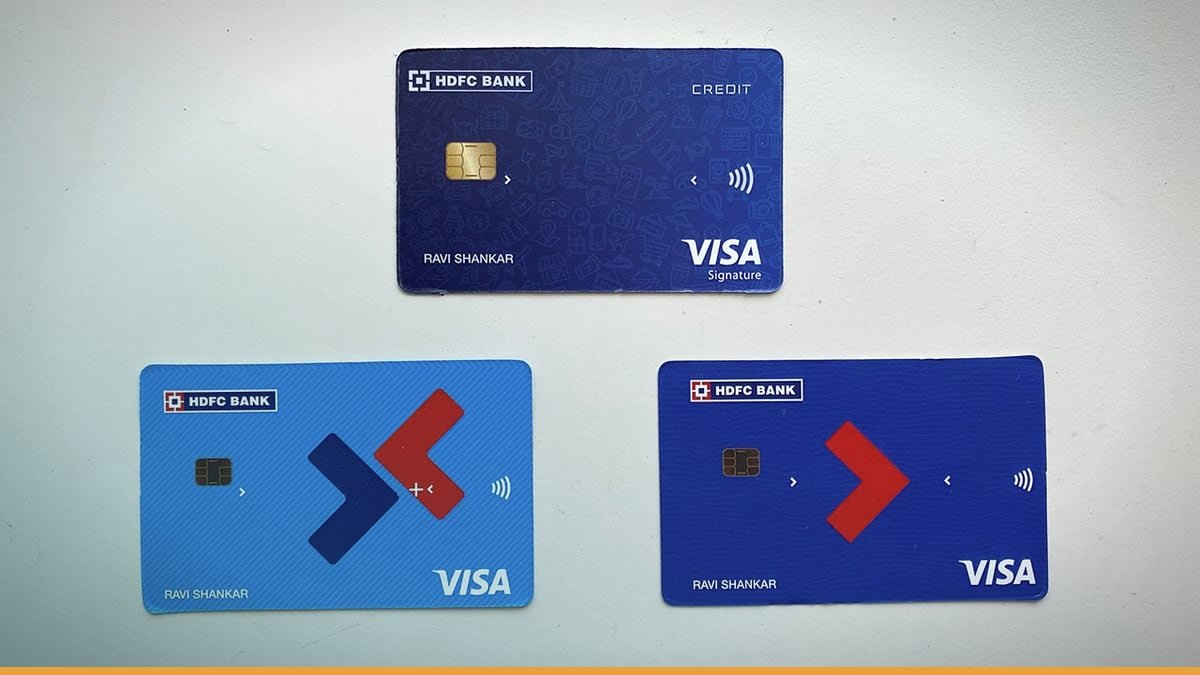
Header image source: HDFC Bank re-launches Millennia & other credit cards – CardExpert via CardExpert via Google — cropped to 16:9 and colour-adjusted.
Key takeaways
- HDFC finance charges range 2.5%-3.6% monthly (30%-43.2% annual)
- Daily reducing balance method compounds interest every day
- Pay full balance by due date to avoid all finance charges
Finance charges hit your HDFC credit card statement when you don’t clear the full balance by the due date. That’s it. Not late fees, not annual charges—just interest on unpaid balances. Avoidable? Absolutely. Just pay in full every month. But here’s the rub: HDFC’s rates run from 2.5% to 3.6% per month, which translates to 30%–43.2% annualised. That’s not just expensive—it’s a debt spiral waiting to happen if you slip up.
Take a hypothetical balance on the MoneyBack card. Pay less than the full balance by the due date, and finance charges apply to the remaining amount. At 3. At 3.6% per month, interest accrues on the unpaid balance. Miss a few payments, and that number starts compounding. Suddenly, you’re paying interest on interest, and a manageable balance balloons into something far worse.
How HDFC Calculates Finance Charges: The Daily Grind
HDFC doesn’t just tack on a flat fee. It uses a daily reducing balance method—interest calculated on the outstanding amount every single day, then summed at the end of the billing cycle. Here’s the breakdown:
- MoneyBack Credit Card: 3.6% per month (43.2% annualised).
- All Miles Credit Card: 3.49% per month (41.88% annualised).
- General range across HDFC cards: 2.5%–3.6% per month (30%–43.2% annualised).
The formula is simple: Finance Charge = (Outstanding Balance × Daily Rate) × Number of Days
Where Daily Rate = Monthly Rate ÷ 30. For the MoneyBack card, that’s 0.036 ÷ 30 = 0.0012 (or 0.12%) per day.
Why does this matter? Because every day counts. Pay ₹5,000 on a ₹50,000 balance 10 days after the due date, and you’re still paying interest on the full ₹50,000 for those 10 days—and on the remaining ₹45,000 for the rest of the cycle. There’s no partial grace period. No mercy.
When Do Finance Charges Actually Kick In?
Finance charges don’t apply if you pay the full statement balance by the due date. That’s the rule. But the exceptions are what trip people up.
Primary Trigger: Not paying the full statement balance. Paying the minimum due (usually 5% of the outstanding) avoids late fees but not finance charges. Those still apply to the remaining balance.
Grace Period: Typically 20–50 days, depending on when you made the purchase. Buy something on Day 1 of your billing cycle and pay it off by Day 50, no interest. But carry a balance from the previous cycle, and the grace period vanishes. New purchases start accruing interest immediately.
Exceptions Where Finance Charges Apply Immediately:
- Cash advances: No grace period. Interest starts the moment you withdraw cash.
- EMIs: Separate interest rates apply (usually lower than finance charges, but still not zero).
- Partial payments: Even if you pay more than the minimum due, finance charges apply to the remaining balance.
The Hidden Cost: How Finance Charges Compound Debt Over Time
Let’s run the numbers. You have a ₹50,000 balance on your HDFC MoneyBack Credit Card (3.6% monthly finance charge). The minimum due is ₹2,500 (5%).
- Month 1:
- You pay ₹2,500.
- Remaining balance: ₹47,500.
- Finance charge: ₹47,500 × 3.6% = ₹1,710.
- New balance: ₹49,210.
- Month 2:
- You pay another ₹2,500.
- Remaining balance: ₹46,710.
- Finance charge: ₹46,710 × 3.6% = ₹1,681.56.
- New balance: ₹48,391.56.
- Month 3:
- You pay ₹2,500 again.
- Remaining balance: ₹45,891.56.
- Finance charge: ₹45,891.56 × 3.6% = ₹1,652.10.
- New balance: ₹47,543.66.
After three months, you’ve paid ₹7,500 but reduced your balance by just ₹2,456.34. The rest went to interest. At this rate, clearing the original ₹50,000 debt would take over two years—and you’d pay ₹18,000+ in interest along the way.
This isn’t hypothetical. This is how credit card debt traps people. The minimum payment is designed to keep you paying interest for as long as possible.
Recent Changes (July 1, 2025): How New Fees Increase Your Risk
HDFC’s latest policy updates, effective July 1, 2025, introduce new fees that indirectly increase the risk of finance charges. Here’s what’s changing:
- 1% Fee on Skill-Based Gaming Transactions
- Applies when monthly spending exceeds a certain amount.
- Covers skill-based gaming transactions.
Example: Spend ₹20,000 on skill-based gaming in a month, and you’ll pay ₹200 in fees.
- Impact: Higher fees → higher outstanding balance → greater chance of carrying a balance → more finance charges.
- 1% Fee on Wallet Loading (Above ₹10,000/Month)
- Affects PayTM, Mobikwik, Freecharge, Ola Money, and others.
Example: Load more than ₹10,000 into a third-party wallet via HDFC credit card, and you’ll incur a 1% fee on the amount above ₹10,000.
- Risk: Users who regularly load wallets may see their balances inflate, making it harder to pay in full.
- Capped Fees on Rent, Fuel, and Education
- Previously charged 1%.
- Now capped at ₹4,999/month.
- Example: Pay rent, fuel or education expenses, and the fee is now capped at ₹4,999 per month.
- Effect: Lower fees → less risk of ballooning balances → reduced exposure to finance charges.
Why This Matters: These fees don’t directly change finance charge rates, but they increase the likelihood of cardholders carrying balances. And once you carry a balance, finance charges kick in—and they’re far more expensive than any 1% fee.
How to Avoid Finance Charges: Strategies That Actually Work
Finance charges are avoidable, but it takes discipline. Here’s how to dodge them entirely:
- Pay the Full Statement Balance Every Month
- This is the only foolproof way to avoid finance charges.
- Set up autopay to ensure you never miss a payment.
- Avoid Cash Advances
- No grace period, and interest starts accruing immediately.
- Cash advances also attract a higher finance charge (often 3.6% or more).
- Monitor Wallet and Gaming Spending
- With the new 1% fees, loading wallets or gaming via credit card can inflate your balance.
- If you must use your card for these, track spending to stay under thresholds.
- Use EMIs for Large Purchases
- HDFC’s EMI options typically charge lower interest than revolving balances.
- Example: A ₹50,000 purchase converted to a 12-month EMI might cost 12%–18% annual interest—far better than 43.2%.
- Understand Your Grace Period
- New purchases only avoid interest if you paid your previous balance in full.
- If you’re carrying a balance, new purchases start accruing interest immediately.
HDFC vs. Competitors: How Do Finance Charges Stack Up?
HDFC isn’t alone—most Indian banks charge similar rates. But the details matter:
- Kotak Mahindra Bank:
- Also introduced a 1% fee on skill-based gaming (effective June 1, 2025).
- Finance charges: Typically 3.5%–4% per month (slightly higher than HDFC).
- SBI, ICICI, Axis:
- Finance charges: 3.5%–4% per month.
- Some premium cards offer lower rates or waivers for high-spending customers.
Key Takeaway: HDFC’s rates are competitive, but the new fees on gaming and wallet loading make it easier to trigger finance charges. If you’re comparing cards, look beyond the interest rate—consider fee structures, grace periods, and reward redemption policies.
The Bigger Picture: Why Finance Charges Matter More Than Ever
Credit card debt is a growing problem in India. Post-pandemic, credit card spending has surged, and with it, exposure to finance charges. Here’s why this matters:
- Debt Trap Risk:
- High-interest credit card debt is one of the fastest ways to spiral into financial stress.
- The RBI has flagged excessive credit card fees as a consumer protection concern.
- Behavioral Shift:
- More Indians are using credit cards for daily spending, not just emergencies.
- With the rise of UPI-linked credit cards, the line between "debit" and "credit" spending is blurring.
- Regulatory Scrutiny:
- The RBI is pushing banks to improve transparency around fees and interest charges.
- Expect more changes—possibly even caps on finance charge rates—in the coming years.
The Open Question: Are Finance Charges Still Justified?
HDFC’s finance charges—3.6% per month, 43.2% annualised—are among the highest consumer interest rates in India. For comparison, personal loan rates hover around 10%–18% per annum. So why do credit card finance charges remain so high?
- Risk: Credit cards are unsecured debt. Default rates are higher than for loans.
- Profit: Banks make significant revenue from finance charges. Banks make significant revenue from finance charges.
- Behavioral Nudge: High finance charges incentivise on-time payments, reducing default risk.
But here’s the counterpoint: Are these rates fair? Or are they exploiting behavioral biases—like the tendency to underestimate compounding interest—to maximise profits?
The answer isn’t clear-cut. What is clear is that finance charges are a critical factor in credit card debt management. Ignore them, and they’ll quietly inflate your balance. Understand them, and you can use your card as a tool—not a trap. The real question is whether the system is designed to help you or to keep you paying.
Sources
- HDFC Credit Card Finance Charges & How to Avoid Them
- HDFC Credit Card Fees & Charges: Interest Rate, Cash …
- Major changes in HDFC Bank credit card: New charges and limits effective from July 1
- HDFC Credit Card Lounge Access Changes: New charges apply to rent, gaming, and reward limits
- HDFC Bank To Charge Fee On Real-Money Gaming Transactions Made Via Credit Cards
- All Miles Credit Card Fees & Charges
- MoneyBack Plus Credit Card Fees and Charges